


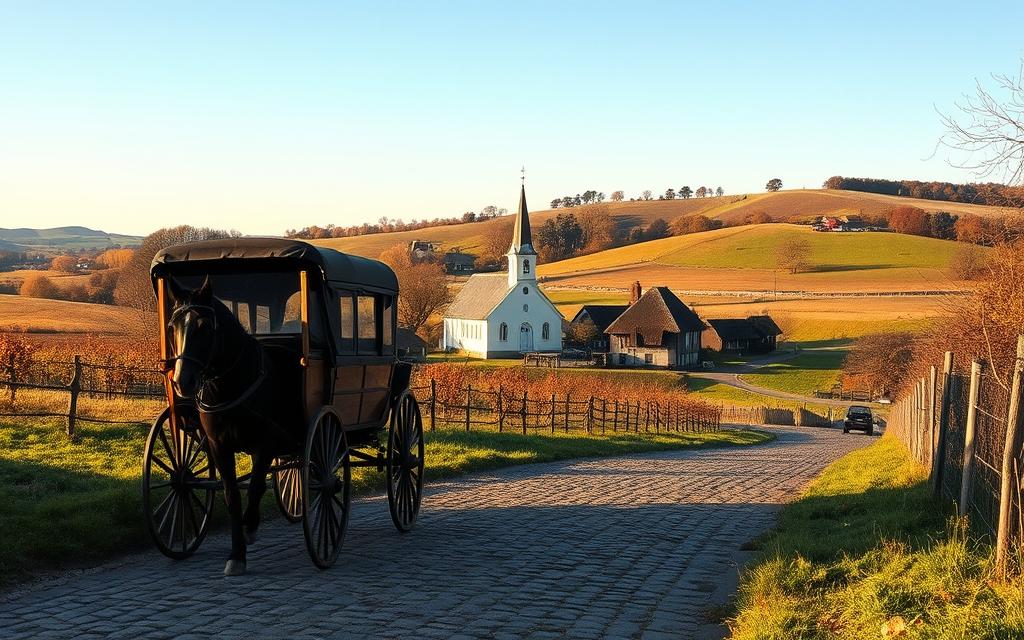
Imagine waking up to complete silence, no alarm blares. No lights flicker on. Transport systems freeze. This stark vision shows how much we rely on technology today.
We’re not just going back to old times. We’re looking at a world without any digital systems. We’ll see what daily life would be like with old-fashioned ways.
The first thing you’d notice is the chaos. But this thought experiment is important. It helps us see how much technology affects our lives, how we talk to each other, and even our reality.
We see this pre-digital era as a mirror to our current world. The difference is huge.
Daily Routines and Household Management
Imagine waking up to natural light, not electronic alarms. Starting each day with hands-on tasks that need physical effort, not digital ease. This is what an analog lifestyle is all about. It’s where home management uses old-fashioned methods and manual labour.
Without today’s tech, doing household chores becomes a slow, careful process. It connects us more with our surroundings and the resources we use.
Morning Rituals Without Digital Assistance
Mornings without tech start with sunlight, not alarms. No buzz from phones or alerts to wake us. Instead, we light candles or oil lamps, which need careful handling.
Getting clean is different too. We use bucket baths, heating water over fires or stoves. Grooming with manual tools like straight razors and hand mirrors takes more time and effort. These morning routines make our days slower and more thoughtful.
Related Posts:






Manual Food Preparation and Preservation
Managing food without tech is a big part of our day. Every meal means getting our hands dirty, from picking ingredients to cooking. This manual labour way of life shows true analog lifestyle. It means knowing how to keep food fresh without refrigeration.
Traditional Cooking Methods and Storage Techniques
Cooking is done over fires, wood stoves, or charcoal pits. These need constant care and fuel. Learning to control the heat is a skill, not just turning a dial.
Preserving food uses old methods:
- Salting and smoking meats for long-term storage
- Pickling vegetables in vinegar or brine solutions
- Root cellaring for cool, dark storage of produce
- Drying fruits and herbs for extended shelf life
These methods keep food fresh without electricity. But they need regular checking and the right conditions.
Water Collection and Purification Systems
Getting clean water is a daily task, not a given. We draw from wells or gather from streams and rivers. This takes a lot of time and effort.
Purifying water is done without modern filters:
- Boiling water over fires kills microorganisms
- Sand and charcoal filtration systems remove sediments
- Solar disinfection uses sunlight’s UV radiation
- Sedimentation allows particles to settle before decanting
These methods need constant attention and knowledge of water safety. So, staying hydrated is a mindful task.
| Household Task | Modern Method | Analog Alternative | Time Investment |
|---|---|---|---|
| Wake-up Routine | Electronic alarm | Natural light/mechanical clock | +15 minutes |
| Water Heating | Electric/gas heater | Fire/stove heating | +30 minutes |
| Food Preparation | Pre-packaged/convenience foods | From-scratch preparation | +2 hours |
| Water Purification | Tap filtration systems | Boiling/natural filtration | +45 minutes |
| Food Preservation | Refrigeration/freezing | Salting/drying/cellaring | +3 hours weekly |
This shows how an analog lifestyle changes how we spend our time. Household tasks become the main focus, not just background work. The more manual labour we do, the closer we get to our resources. But it also means we need to plan and work harder physically.
Communication Methods and Social Interaction
In a world without digital tech, our way of talking to each other would change a lot. We’d talk face-to-face more, instead of using messages or video calls. This would make our communities closer by bringing people together in real life.
Physical mail would make a comeback. Writing letters by hand would become popular again. Instead of emails, couriers and local messengers would deliver important messages.
News would spread through town criers and community boards. These boards in town centres would post local news and events. Oral stories would keep our cultural heritage alive.
Public payphones would be used for urgent calls, not mobiles. We’d plan meetings in advance, not at the last minute. This slower pace would help us connect on a deeper level.
Without digital tech, our social lives would be very different. We’d lose the quick connection to the world but gain stronger local ties. This world would value face-to-face interactions over quick digital ones, making our communities closer.
FAQ
What is meant by a world without modern technology in this context?
In this context, a world without modern technology means no digital or industrial advancements. This includes no electricity, internet, or automated systems. Society would go back to pre-digital or pre-industrial ways of living, working, and talking.
How would daily routines such as waking up and personal hygiene be managed without technology?
Without digital alarms, people would wake up to sunlight or use wind-up clocks. For personal hygiene, they would use manual tools like non-electric toothbrushes. They would draw water from wells or streams and heat it manually for washing.
What methods would be used for food preparation and preservation in a non-digital world?
Food preparation would use traditional methods like open-fire cooking and baking in wood-fired ovens. Manual tools would be used for chopping and grinding. Preservation would use old methods like salting, smoking, drying, or cellaring, needing knowledge of seasonal cycles.
How would communication function without modern technology like smartphones or the internet?
Communication would go back to face-to-face talks, physical mail, and community systems like town criers. This would make local bonds stronger and exchanges more meaningful. But, it would mean no instant global connection.
Would there be any positive aspects to reverting to a pre-digital lifestyle?
Yes, there are benefits like stronger community ties and more self-reliance. People might focus less on digital distractions and reconnect with traditional skills and nature. But, there would be challenges like less efficiency and access to information.
How would essential utilities like water and light be accessed without technology?
Water would come from wells, rivers, or rainwater harvests, purified by boiling or simple filters. Lighting would use natural daylight, candles, oil lamps, or gaslights. This would need more effort and planning for evening or indoor activities.
What role would storytelling and oral traditions play in a technology-free society?
Storytelling and oral traditions would be key for cultural preservation and fun. They would help communities bond and share knowledge between generations. This would focus on listening, memory, and personal engagement, unlike digital media.
