



Our world today is all about digital connections. Smartphones, wearables, and online platforms have changed how we live and talk to each other.
These new tools bring big benefits for our health. Fitness trackers keep track of how active we are. Telehealth services let us get medical help easily.
But, there are also big challenges. Too much screen time can mess with our sleep and focus. Seeing others’ perfect lives on social media can make us feel bad about ourselves.
This article looks at both sides of our digital world. We’ll see the good and the bad of living in a digital age.
Knowing how technology affects our health helps us make better choices. Let’s explore how our devices impact our well-being together.
The Evolution of Digital Technology and Health
Digital technology has changed healthcare a lot. It has moved from simple computers to complex systems. This change has changed how we see health and wellness.
The health technology evolution has been fast. It has brought new chances but also new problems.
Knowing the digital health history is key today. It shows how far we’ve come and what’s next. This journey has spanned many years and technologies.
Historical Context of Technological Advancements
In the 1960s, digital health started with mainframe computers. They managed hospital work and patient records. But, they were big, expensive, and only for big hospitals.
Related Posts:





In the 1980s, personal computers came to medicine. They helped with data but were limited in use.
The 1990s brought the internet to health. It made medical info available to all. But, using electronic health records was slow because of cost and tech issues.
Important moments in health tech include:
- 1996: First telemedicine systems connecting rural patients with specialists
- 2000s: Wireless technology enabling mobile health applications
- 2009: Smartphone health apps becoming widely available
- 2013: FDA approval of first mobile medical applications
Innovation sped up as computers got better and cheaper. What started as tools for admin became key in patient care.
Current Trends in Digital Health Tools
Today, modern health tech is all about integration and smarts. AI and machine learning do things like read medical images and predict health risks. They get better with more data.
Wearable tech is another big step. It tracks health signs all the time. This gives insights into health patterns.
Telehealth has grown from simple video calls to full remote care. It lets patients get care from home. This is very helpful in emergencies.
The focus now is on making systems work together. This creates a full health ecosystem. It helps care for patients better.
Cloud computing has made health tech even more advanced. It keeps medical data safe but lets doctors access it anywhere. This helps care teams work together better.
How Does Technology Impact Health Positively?
Digital innovations have changed healthcare, bringing new ways to improve wellbeing. Technology in health care offers many benefits for both patients and doctors.
Enhanced Access to Health Information
The internet has changed how we find medical information. Now, people can get answers to health questions anytime, not just during doctor visits.
Online Medical Resources and Databases
Platforms like PubMed, NHS Choices, and MedlinePlus offer reliable health information. They have thousands of studies and guidelines. This lets patients learn about health before seeing doctors.
Medical schools and hospitals also have online libraries. These include symptom checkers and prevention tips. Having the right information helps people make informed health choices.
Telemedicine and Remote Consultations
Virtual healthcare services have made it easier to see doctors, no matter where you are. This is a big advantage for those in rural areas.
Platforms like Teladoc and Amwell
Teladoc lets patients talk to doctors via video calls. It offers everything from routine check-ups to mental health support. Amwell also provides similar services, including managing prescriptions.
These platforms keep your health information private while making care more convenient. You can see doctors at times that fit your schedule. This makes healthcare more accessible and efficient.
Wearable Health Devices
Wearable technology has changed how we monitor our health. These devices track our vital signs and activity all day. They help spot patterns that might not be noticed during regular check-ups.
Examples: Fitbit, Apple Watch
Fitbit tracks your heart rate, sleep, and exercise. The app gives insights and tips based on your data. It also lets you set goals and track progress.
Apple Watch has advanced health features like ECG and fall detection. It can even call for help in emergencies. These devices help people take charge of their health.
Together, these technologies create a system for managing health. They give patients more control while keeping them connected to healthcare. This is the best of modern health technology.
Mental Health Benefits of Digital Life
Digital technology has changed how we look after our mental health. It offers tools that make support easy to get. These tools help us feel better and connect with others in new ways.
Mental Health Apps and Support
Mental health apps are a big step forward. They help us deal with stress, anxiety, and depression. They use methods that have been proven to work.
Apps like these use techniques from cognitive behavioural therapy and mindfulness. They also let you track your mood. This makes it easier to get help when you need it.
Apps like Headspace and Calm
Apps like Headspace and Calm are leading the way. They offer meditation, sleep stories, and breathing exercises. These help us handle stress every day.
Headspace is great for beginners and experts alike. It makes meditation easy to start with.
Calm helps with sleep and anxiety. It has lots of meditation content. Both apps show how tech can help with mental health.
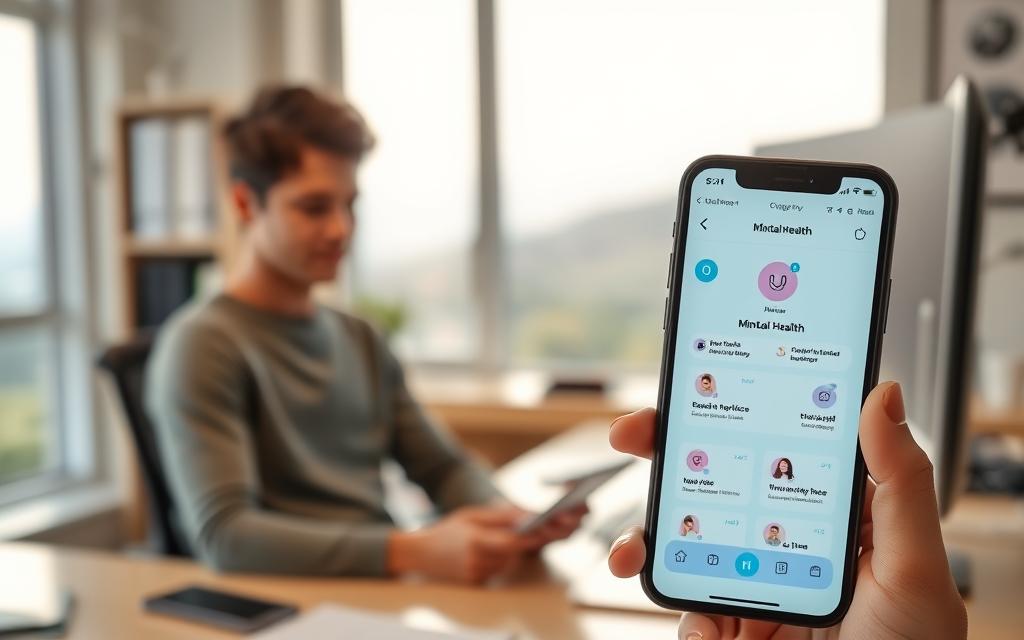
Research shows these apps really work. They can lower stress and improve how we feel emotionally.
“Digital mental health tools have transformed accessibility, allowing people to receive support exactly when they need it most.”
Online Communities and Social Support
Online platforms have opened up new ways to support each other. They offer a place to share experiences and get advice. It’s a space where people understand what you’re going through.
Places like forums and social media groups are safe for talking about mental health. They make you feel less alone.
The table below shows the benefits of different online mental health support communities:
| Community Type | Primary Benefits | User Engagement Level | Anonymity Options |
|---|---|---|---|
| Specialised Forums | Structured discussions, expert moderation | High | Full anonymity available |
| Social Media Groups | Real-time interaction, diverse perspectives | Variable | Limited anonymity |
| App-Based Communities | Integrated with tools, focused support | Moderate to High | User-controlled privacy |
| Video Support Groups | Visual connection, immediate feedback | High | Partial anonymity |
These online groups help fight feelings of loneliness. They let people give and get support. This makes everyone feel better.
It’s important to choose safe online places. Look for ones with good moderation and clear rules. This keeps everyone safe.
Apps and online communities together are a strong way to support mental health. They can work well with traditional therapy. They help us build good habits for our mental wellbeing.
Physical Health Improvements Through Technology
Digital innovations have changed how we care for our bodies. They offer tools that make staying fit and eating right easier than ever. Modern physical health tech gives us custom solutions for our health needs.
Fitness Tracking and Motivation
Wearable devices and apps on our phones are key for those who care about their health. These fitness technology tools track steps, heart rate, and calories burned all day.
Many devices let you set goals and earn badges for reaching them. This gives you a boost to keep moving.
Studies show people with fitness trackers take 27% more steps daily than those without. This shows tech can really get us moving more.
Diet and Nutrition Management Apps
Apps have made managing what we eat much easier. They help us plan meals and track calories. These tools teach us about the food we eat.
Today’s nutrition apps use big food databases and barcode scans to give us accurate nutrition info. They also let us share our progress and recipes with others.
Examples: MyFitnessPal, Noom
MyFitnessPal is a top app for tracking what we eat. It has info on millions of foods, making it easy to count calories.
Noom focuses on changing how we think about food, not just cutting calories. It uses colours to log food and teaches us about nutrition every day.
| Application | Primary Focus | Unique Features | User Base |
|---|---|---|---|
| MyFitnessPal | Calorie Counting | Barcode Scanner, Recipe Importer | 200+ million users |
| Noom | Behaviour Change | Colour-Coded System, Coaching Support | 50+ million users |
| Lose It! | Weight Management | Challenges, Social Features | 40+ million users |
| FatSecret | Diet Journaling | Photo Food Diary, Keto Focus | 30+ million users |
These apps show how physical health tech helps us build lasting habits. They combine tracking data with science to help us stay healthy for good.
Risks of Digital Life on Physical Health
Digital technologies bring many health benefits but also pose physical health challenges. It’s important to know these risks to stay well in our digital world.
Sedentary Lifestyle and Screen Time
Sitting for long periods with digital devices is bad for our health. Adults who spend over four hours a day on screens face serious health risks.
Screen time can lead to a lack of physical activity. This means we miss out on activities that keep our bodies healthy and strong.
Impact on Obesity and Posture
Sitting too much can lead to weight gain and metabolic problems. It reduces calorie burn and can lead to snacking, increasing obesity risk.
Text neck is a growing concern. It happens when we look down at devices for too long, straining our neck and muscles.

- Chronic neck and shoulder pain
- Reduced spinal flexibility
- Muscle imbalances and weakness
- Increased risk of disc compression
Blue Light Exposure and Sleep Disruption
Digital devices give off blue light, which messes with our sleep. This light stops our body from making melatonin, the sleep hormone.
This blue light sleep issue can make our sleep worse. It can delay when we fall asleep and reduce deep sleep.
Devices like Smartphones and Laptops
Smartphones and laptops are bad because they’re close to our eyes and we use them at night. They give off a lot of blue light, affecting our sleep.
The table below shows how different devices affect sleep:
| Device Type | Blue Light Intensity | Average Evening Usage | Sleep Onset Delay |
|---|---|---|---|
| Smartphones | High | 2.5 hours | 45 minutes |
| Laptops | Very High | 3 hours | 60 minutes |
| Tablets | Medium-High | 2 hours | 30 minutes |
| E-readers (with front light) | Low-Medium | 1.5 hours | 15 minutes |
Long-term blue light exposure also causes eye strain. Symptoms include dry eyes, blurred vision, and headaches. These can make it hard to work and feel comfortable.
Knowing these risks helps us use technology wisely. Simple steps like taking breaks, using blue light filters, and setting device limits can help avoid these problems.
Mental Health Risks Associated with Technology
Underneath the digital ease, mental health risks are complex and growing. Technology brings many benefits but also unique psychological challenges. These challenges affect people of all ages.
Social Media and Anxiety
Research links social media to anxiety disorders. Too much time on these platforms can make people feel not good enough and compare themselves to others.
Even though social media is meant for connection, it can make people feel isolated. Seeing perfect lives online can lead to feelings of inadequacy.
Platforms like Instagram and Facebook
Instagram can harm body image and perfectionism. Just 30 minutes a day can lower self-esteem in young adults.
Facebook’s feed can make people anxious with its controversial content. It also creates pressure to show off achievements.
Both platforms use design to keep users hooked. Features like infinite scrolling and notifications can lead to addiction.
Cyberbullying and Online Harassment
Cyberbullying is a constant threat with serious effects. Cyberbullying health impacts can last a long time, causing lasting psychological harm.
Victims often feel anxious, have trouble sleeping, and struggle in school or work. They are also at higher risk of depression and self-harm.
Digital platforms make it easy for bullies to hide. Unlike in-person bullying, online harassment leaves a permanent trail that victims can’t escape.
Digital Addiction and Its Consequences
Digital addiction is a growing concern. It changes the brain, similar to substance addiction, through constant stimulation.
Unchecked digital addiction can lead to:
- Difficulty focusing and concentrating
- Worsening social skills from less face-to-face interaction
- Disrupted sleep from blue light and mental stimulation
- Neglecting important responsibilities and relationships
The World Health Organisation now classifies gaming disorder as a mental health condition. This shows how serious the medical field views digital addiction. Teaching digital literacy and early intervention are key to reducing these risks.
Recognising these challenges is the first step to healthier digital habits. The next sections will look at ways to balance technology’s benefits and its mental health costs.
Privacy and Security Concerns in Digital Health
Digital health technologies are now a big part of our lives. This raises important questions about data protection and ethics. Health information is very personal, making these issues even more urgent.

Data Breaches and Health Information
Health data is among the most private information we have. If it gets into the wrong hands, the damage can be huge. In recent years, hackers have accessed medical records through weak systems.
These breaches put patients at risk of identity theft and insurance scams. Unlike credit card info, health data can’t be easily replaced. Once leaked, it can harm people for a long time.
Healthcare providers must take strong steps to safeguard patient data. This includes using encryption, conducting regular security checks, and training staff. Patients should also know how their data is used and kept safe.
Ethical Considerations in Health Tech
Health tech is advancing fast, raising big ethical questions. Who owns data from wearable devices? How should AI be used in making medical decisions?
One big worry is discrimination through health data. Insurance firms or employers might use predictive health info unfairly. This could lead to biased treatment based on genetic or health factors.
Being open about data use is also key. Companies making health tech must clearly share their data practices. Users should know how their info is used and shared.
Strong rules are needed to ensure ethical health tech practices. These rules should support innovation while protecting individual rights.
As users, we can push for better health data security and support digital health privacy. Knowing about these topics helps us choose better tech.
Technology’s Role in Chronic Disease Management
Digital innovations are changing how we manage long-term health issues. Modern chronic disease technology brings new tools for tracking, analysis, and early care. These tools give patients and healthcare teams real-time data and insights.
Technology helps with conditions like diabetes and heart disease. It offers ongoing support beyond doctor visits. Patients can manage their health better. Healthcare teams make better decisions with detailed data.
Monitoring Devices for Conditions like Diabetes
Advanced health monitoring devices have changed diabetes care. These tools track glucose levels without the need for frequent blood tests. Patients get instant updates on their blood sugar.
These systems warn of dangerous glucose levels. This helps prevent emergencies and hospital stays. The data helps find patterns and triggers.
Examples: Continuous Glucose Monitors
Continuous glucose monitors (CGMs) are a big step forward in diabetes care. These small sensors check glucose levels every few minutes. The results go to smartphones or special receivers.
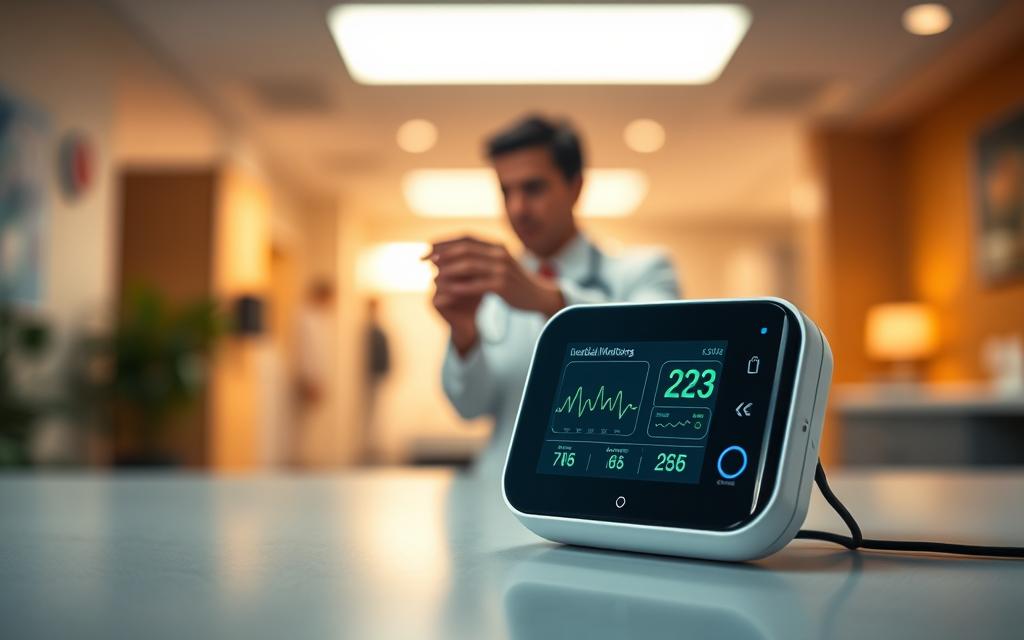
CGMs show where glucose levels are going with trend arrows. This helps make changes in insulin or diet before it’s too late. Many systems work with insulin pumps for automatic dosing.
Recent research shows CGM users have better HbA1c levels. They feel less worried about low blood sugar and are happier with their treatment. These devices are the future of diabetes care.
AI and Predictive Health Analytics
Artificial intelligence turns health data into useful insights. AI health analytics can spot problems before they start. It finds patterns that humans might miss.
These systems look at lots of data at once. They consider how well patients take their medicine, their lifestyle, and their health numbers. This leads to tailored risk assessments and prevention plans.
Predictive analytics help doctors focus on the most urgent cases. This approach improves health outcomes and saves money.
| Technology Type | Primary Function | Key Benefits | Common Conditions |
|---|---|---|---|
| Continuous Monitors | Real-time biometric tracking | Prevents emergencies, identifies patterns | Diabetes, hypertension |
| Smart Medication Systems | Dose reminder and tracking | Improves adherence, reduces errors | Various chronic conditions |
| AI Predictive Platforms | Risk assessment and forecasting | Early intervention, personalised care | Cardiac conditions, diabetes |
| Remote Consultation Tools | Virtual healthcare access | Convenience, continuous support | All chronic conditions |
These technologies work together to create a full care system. Patients live better lives despite their conditions. Healthcare systems see fewer complications and hospital visits.
As chronic disease technology gets better, we’ll see more advanced solutions. The future looks bright for managing chronic diseases worldwide.
Balancing Digital and Analog Life for Optimal Health
Finding a balance between digital and real-world life is a big challenge today. Technology offers many benefits but also risks to our health. It’s key to use digital balance strategies to keep our minds and bodies healthy.

Strategies for Reducing Screen Time
Managing your digital use needs simple, daily steps. Experts say start with small changes that are easy to keep up.
Here are some ways to reduce screen time:
- Make some areas of your home tech-free, like bedrooms and dining rooms
- Use your device’s built-in tools to limit your screen time
- Take regular breaks from digital devices, starting with short periods
- Think before you check your phone, ask if it’s really necessary
- Use your time online for something specific, not just scrolling
Studies show these methods can change how we use technology. They help us live more intentionally.
Incorporating Offline Activities
Living a full life means enjoying things offline too. Doing offline health activities helps counter the effects of too much screen time. It also boosts our brains and emotions.
Good offline activities include:
- Exercising outside, which connects you with nature
- Talking to people face-to-face, which strengthens relationships
- Doing hands-on hobbies like cooking or gardening
- Reading real books, which improves understanding and memory
- Practicing mindfulness, like meditation or journaling
“The most productive digital citizens are those who regularly unplug to recharge their human capacities.”
It’s not about avoiding technology, but using it wisely. Setting boundaries and enjoying offline activities helps us use tech well. This way, we get its benefits without losing our human needs for connection and movement.
This balanced way of life improves our sleep, lowers stress, and boosts our overall health. It shows that sometimes, the best tech strategy is knowing when to take a break.
Future Trends in Technology and Health
Looking ahead, new technologies are set to change patient care and results. These changes will shape how we view wellness, diagnosis, and treatment. It’s a new era for health.
Emerging Technologies like VR in Therapy
Virtual reality is changing therapy in many health areas. VR therapy is now used in clinics for pain, phobias, and rehab. It offers a new way to treat patients.
People in physical therapy use VR to practice in a safe space. Mental health experts use it for exposure therapy and to help with anxiety. It’s a safe place for health challenges.
New tools include augmented reality for surgery planning and AI for diagnosis. These are big steps forward in future health technology.
Potential Long-Term Impacts
The long-term tech impacts on healthcare could change everything. Telemedicine and remote monitoring might cut down on hospital visits. This could lead to better care at home.
Data analytics and AI could spot diseases early and tailor treatments. But, we must think about privacy, fairness, and training for doctors. These are big questions.
Knowing these long-term tech impacts helps doctors get ready for the future. New tech could make healthcare better and more efficient for all.
Conclusion
Technology has a big impact on health, showing both great benefits and risks. This summary shows how telemedicine and wearables improve care and health management. But, we must also watch out for too much screen time and data privacy issues.
Finding a balance is essential. Using technology wisely, alongside offline activities, helps us stay well. Studies suggest we should use technology with care and purpose.
To make the most of technology, we need to be aware and adapt. By doing so, we can ensure technology helps improve our health.
FAQ
How has digital technology evolved in relation to health?
Digital tech has grown a lot. It started with the internet and mobiles. Now, we have AI and wearable tech. These changes have made healthcare better, giving us more access and better health results.
What are the positive impacts of technology on health?
Tech helps us get health info online and use telemedicine. Wearable devices like Fitbit help us monitor our health. These tools make managing health easier and more efficient.
Can digital tools benefit mental health?
Yes, apps like Headspace help with stress. Online communities offer support and reduce loneliness. But, it’s key to use these tools wisely to avoid negative effects.
How does technology support physical health improvements?
Devices track our fitness, and apps help with diet. These tools encourage us to be healthier. They help prevent health problems by promoting activity and good eating.
What are the risks of digital life on physical health?
Too much screen time can make us lazy and lead to health issues. Blue light from devices can mess with our sleep and eyes. These risks are serious for our health.
What mental health risks are associated with technology?
Tech can cause anxiety and depression. It can also lead to cyberbullying and addiction. It’s important to use technology wisely to protect our mental health.
Are there privacy and security concerns with digital health tools?
Yes, there are risks like data breaches and ethical issues. Keeping our data safe is vital. We need rules and careful use to protect our privacy.
How does technology aid in managing chronic diseases?
Tech helps with chronic diseases through devices and AI. These tools improve tracking and care. They make managing diseases much better.
What strategies help balance digital and analog life for better health?
To stay healthy, reduce screen time and set limits. Use tools to monitor digital use and do offline activities. These steps help us enjoy tech’s benefits without harm.
What future trends in technology and health should we watch?
New tools like virtual reality in therapy are exciting. They could change healthcare a lot. But, we need to study and think about their ethics.
How can individuals use technology mindfully for optimal health?
Use tech wisely by balancing its good and bad sides. Set limits, choose offline activities, and know about privacy. This way, we can use tech for our health without risks.
