

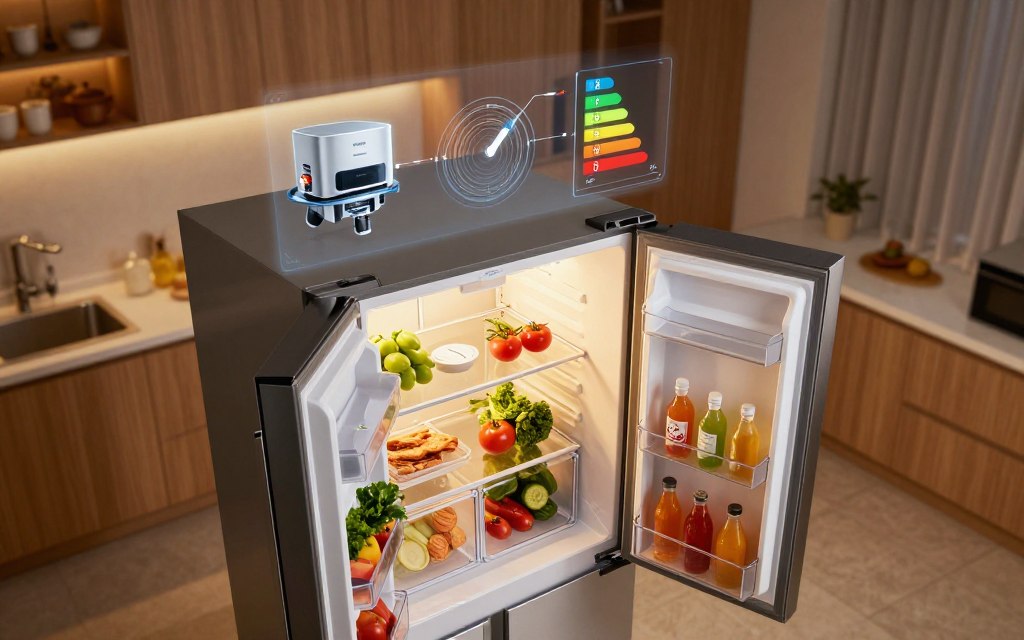
What is refrigerator inverter technology? It is a major advance in cooling systems. It adjusts the compressor’s motor speed to match cooling needs, rather than switching full power on and off. For U.S. homeowners, this matters as electricity costs rise and demand for quiet, efficient appliances grows.
A refrigerator inverter compressor offers several useful benefits. It can deliver substantial energy savings, lower electricity bills, keep temperatures steady, reduce noise, and extend compressor life. Many consumers seek sustainable kitchen upgrades, so this article explains inverter technology in refrigerators and its benefits.
Key Takeaways
- Inverter technology adjusts motor speed based on cooling needs.
- Offers energy savings and lower electricity bills.
- Provides stable temperatures for food preservation.
- Reduces noise levels for a quieter kitchen environment.
- Extends the lifespan of the compressor, enhancing durability.
What Is Refrigerator Inverter Technology?
Inverter technology greatly improves refrigerator cooling efficiency and performance. This guide explains how inverter refrigerator works: a variable frequency drive controls the compressor motor’s speed. These inverter refrigerator benefits include energy savings and better temperature control.
Definition and Core Concept
An inverter refrigerator adjusts compressor speed to match cooling demand. When the door opens, it speeds up to cool the interior quickly, then slows after reaching the set temperature. It maintains a steady temperature with minimal energy, unlike traditional compressors, which cause fluctuations and use more energy.
Evolution of Refrigerator Compressor Technology
Refrigerator compressor technology has changed greatly over time. Fixed-speed reciprocating compressors first dominated the market, but linear and digital inverter compressors followed. Manufacturers like LG and Samsung led these advances with models that improve energy efficiency and performance.
| Compressor Type | Operation Mode | Energy Efficiency | Temperature Control |
|---|---|---|---|
| Fixed-Speed | On/Off | Lower | Fluctuating |
| Linear Inverter | Variable Speed | Higher | Stable |
| Digital Inverter | Adaptive Speed | Highest | Precise |
Traditional vs. Inverter Refrigerator Technology
Knowing how traditional and inverter refrigerators differ helps you make an informed purchase. Each type works differently, with its own benefits and drawbacks.
How Standard Compressors Operate
A standard refrigerator uses a single-speed compressor. When its temperature rises above a set point, the compressor starts at full power. When the temperature falls below another set point, it shuts off completely.
- Energy spikes during startup
- Increased wear and tear on components
- Audible noise during operation
This cycle causes temperature swings and may lead to these effects.
Related Posts:





How Inverter Compressors Operate
A variable speed compressor refrigerator adjusts cooling speed in real time to match demand. Its compressor runs continuously instead of switching on and off, helping maintain a stable temperature.
- Consistent internal temperatures
- Lower energy consumption
- Quieter operation
Continuous operation improves energy efficiency and can extend the compressor’s lifespan.
Key Operational Differences
When comparing inverter vs non-inverter refrigerator models, several operating differences stand out:
- Start-Stop vs. Continuous Operation: Standard compressors stop and start frequently, while inverter compressors run continuously.
- Fixed vs. Variable Speed: Standard models have a fixed speed, whereas inverter models adjust their speed based on need.
- Higher vs. Lower Energy Consumption: Inverter refrigerators typically consume less energy over time.
- Wider vs. Narrower Temperature Fluctuations: Inverter models maintain a more consistent temperature.
- Louder vs. Quieter Performance: Inverter compressors operate more quietly than their standard counterparts.
Choosing between traditional and inverter technology can affect energy bills, food preservation, and your overall kitchen experience.
How Inverter Compressor Technology Works
Inverter compressor technology drives energy-efficient cooling. It changes how refrigerators control temperature, improving performance and environmental impact. The following components make this system work.
The Role of Variable Frequency Drives
A variable frequency drive (VFD) supports inverter compressor technology. It changes incoming alternating current (AC) into direct current (DC), then back to AC at a controlled frequency. This frequency controls motor speed, so the compressor can run at different RPMs.
The compressor changes speed to match cooling needs. It runs at low RPMs for gentle cooling and reaches maximum capacity when needed. This flexibility helps create an energy efficient refrigerator because it prevents wasted energy.
Temperature Sensing and Feedback Systems
Temperature control is another key part of inverter technology. Several sensors sit inside the refrigerator and freezer compartments. They track internal temperatures and send real-time data to a microprocessor.
The microprocessor changes compressor speed to maintain set temperatures. This feedback loop supports strong performance and delivers refrigerator energy savings by reducing wasted energy.
Continuous vs. Intermittent Operation Cycles
Inverter and traditional compressors use different operating cycles. Inverter compressors run continuously at changing speeds, unlike traditional compressors with energy-heavy start-stop cycles.
Continuous operation improves energy efficiency and can extend compressor life. It removes frequent, high-energy startup demands. Inverter technology provides a sustainable, cost-effective choice for modern refrigeration.
| Feature | Inverter Compressors | Traditional Compressors |
|---|---|---|
| Operation Type | Continuous | Intermittent |
| Energy Consumption | Lower | Higher |
| Temperature Control | Precise | Less precise |
| Noise Level | Quieter | Louder |
Energy Efficiency Benefits
An inverter refrigerator supports a greener lifestyle and can offer major financial benefits. It uses less energy than traditional models, which can lower power use. Many users report power savings of 25% to 50% compared with non-inverter refrigerators.
Inverter technology avoids high startup currents and keeps the compressor at lower speeds.
Reduced Power Consumption
Inverter refrigerators can change household energy use. They reduce carbon emissions and electricity bills by using less power. A typical inverter refrigerator can save an average household $50 and $100 each year, depending on rates and use.
Long-Term Cost Savings on Utility Bills
An ENERGY STAR inverter refrigerator may cost more at first than a standard model. However, lower utility bills can cover the higher upfront price over time. The inverter refrigerator cost savings can make it a smart choice for budget-conscious consumers.
Many homeowners recoup the extra cost within a few years, which increases the purchase’s overall value.
ENERGY STAR Ratings and Certifications
When shopping, look for the ENERGY STAR label on an inverter refrigerator. It shows that the appliance meets or exceeds energy guidelines from the U.S. Environmental Protection Agency. Many inverter refrigerators qualify, helping protect wallets and the environment, while the blue ENERGY STAR label quickly identifies efficient appliances.
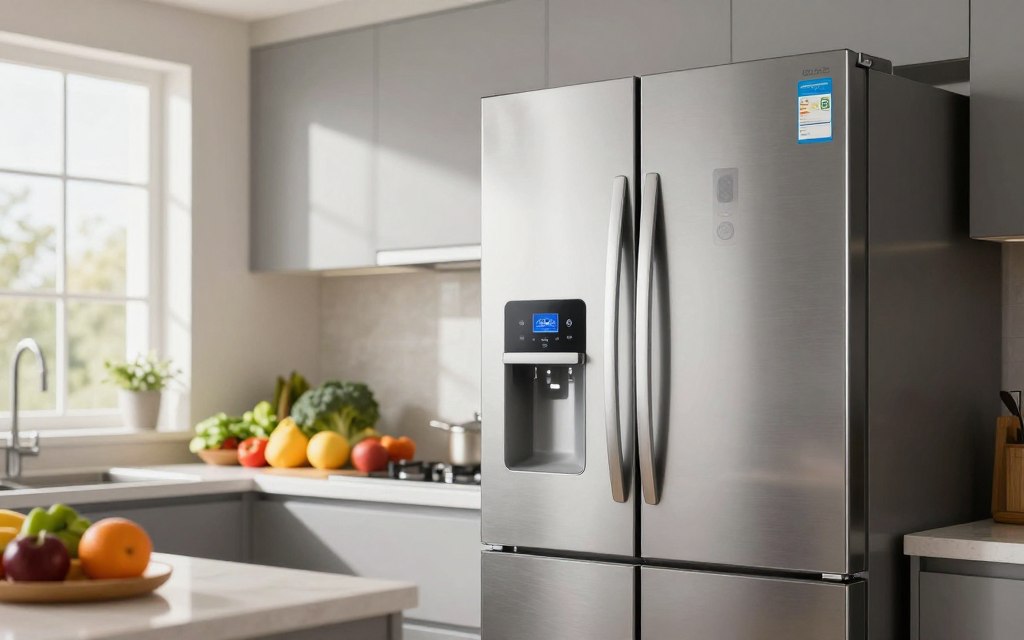
“Choosing an ENERGY STAR inverter refrigerator is not just a smart choice for your home; it’s a step towards a more sustainable future.”
Food Preservation and Performance Advantages
Inverter technology helps refrigerators preserve food and improve performance. These benefits help maintain food quality when choosing an inverter refrigerator. This technology supports inverter refrigerator food preservation and informed buying decisions.
Stable Internal Temperatures
A stable temperature refrigerator provides stable internal temperatures. Unlike traditional models, inverter refrigerators run continuously at low speeds, limiting temperature changes. They often keep changes within ±0.5°F, protecting dairy, meats, and fresh produce from early spoilage.
Faster Cooling Recovery Times
Another benefit is faster cooling recovery times. When someone opens the door or adds groceries, the inverter compressor quickly reaches high speed. This response restores safe temperatures faster than fixed-speed compressors during loading.
Improved Humidity Control
Inverter technology also provides improved humidity control. Stable temperatures and reduced air turbulence help keep crisper drawer humidity consistent. This especially benefits leafy greens and helps prevent freezer burn on frozen items.
Noise Reduction and Operational Durability
Inverter technology offers major benefits, especially by reducing operating noise. Many homeowners value the quiet refrigerator compressor found in inverter models.
These compressors usually produce 35 to 40 decibels, about as loud as a library whisper. This quiet operation helps open-concept kitchens, where noise can disrupt the room’s atmosphere.
Quieter Day-to-Day Operation
Traditional refrigerators can make loud thumps when compressors start and stop. By contrast, inverter compressors run smoothly and steadily. This gradual operation reduces disruptive sounds, making kitchen activities more pleasant.
Low noise also makes conversations and entertainment easier to enjoy without interruptions.
Extended Compressor Lifespan
Another major benefit of inverter technology involves the refrigerator compressor lifespan. Inverter models avoid the high-stress starts common in conventional compressors.
They can run at lower average speeds, which reduces thermal and mechanical stress. As a result, they often last 15 to 20 years, compared with 10 to 12 years for traditional models.
Reduced Mechanical Wear and Tear
Variable-speed operation also reduces mechanical wear and tear in inverter compressors. Lower friction and vibration cause less component fatigue over time. This durability lowers repair risks and maintenance costs for homeowners.
An inverter refrigerator offers a quieter, more reliable appliance that can stand the test of time.
Environmental Impact and Sustainability
In today’s eco-conscious world, inverter refrigerators offer clear environmental benefits. This technology improves energy efficiency and supports sustainability efforts.
Lower Carbon Footprint
These appliances use less electricity because of green refrigerator technology. They run efficiently and lower greenhouse gas emissions from power plants. When electricity comes from fossil fuels, lower use means a smaller carbon footprint.
Reduced Strain on Refrigerants
Inverter technology helps refrigerators hold steady temperatures and run at lower compressor speeds. This lowers the risk of refrigerant leaks and improves refrigerator compressor durability. A stable system reduces strain on the sealed system, extends refrigerant charge life, and limits recharging.
Alignment with Green Home Initiatives
Choosing an inverter refrigerator supports several green home initiatives. It may help residential projects earn LEED certification points and support utility rebate programs. Consumers also favor eco-friendly appliances, so inverter refrigerators are popular in modern households.
Choosing an Inverter Refrigerator: Key Considerations
Consider several key factors when choosing an inverter refrigerator. These points help you make an informed choice that fits your needs. Size, capacity, and brand reliability all matter.
Size and Capacity Requirements
First, measure your kitchen space, including door swing clearance. Couples usually need 18 to 22 cubic feet, while families may need 25 to 30 cubic feet. The right size improves function and energy efficiency.
Leading Brands Offering Inverter Technology
Several brands lead the inverter refrigerator market through innovative technology and reliable performance. These options include some of the best inverter refrigerator brands.
LG Linear Inverter Compressors
LG’s Linear Inverter Compressors are known for quiet operation and energy efficiency. They also include a 10-year warranty, giving buyers peace of mind.
Samsung Digital Inverter Compressors
Samsung offers Digital Inverter Compressors with precise temperature control and smart connectivity. This technology preserves food well while lowering energy use.
Whirlpool Inverter Technology
Whirlpool focuses on affordable, reliable inverter technology. Its models provide steady performance and appeal to budget-conscious consumers.
GE Inverter Compressors
GE combines strong performance with a broad service network. Its inverter compressors offer durability and energy efficiency.
Warranty and Service Considerations
Warranty and service are also critical factors. Check the compressor warranty, which often lasts around 10 years for inverter models. Also, look for certified technicians who can handle maintenance and repairs.
An extended service plan may provide extra peace of mind regarding inverter refrigerator maintenance.
“Choosing the right refrigerator is not just about features; it’s about finding the best fit for your lifestyle.”
Conclusion
Inverter refrigerator technology improves energy use and helps preserve food. Its variable-speed compressor adjusts cooling as needed, which can lower utility bills over time. The higher starting cost may pay off through these long-term benefits for homeowners.
Many inverter models also run more quietly. The lower inverter refrigerator noise level helps create a calmer home. This benefit matters most in open-concept spaces, where sound can travel.
Many modern models offer smart features, making them a smart inverter refrigerator. Wi-Fi connectivity and remote temperature monitoring provide convenience and control at your fingertips.
Before buying, consider your household needs, compare models, and check ENERGY STAR ratings. This approach helps you choose a refrigerator that suits your lifestyle and saves energy. Inverter technology may support a more sustainable, comfortable home.